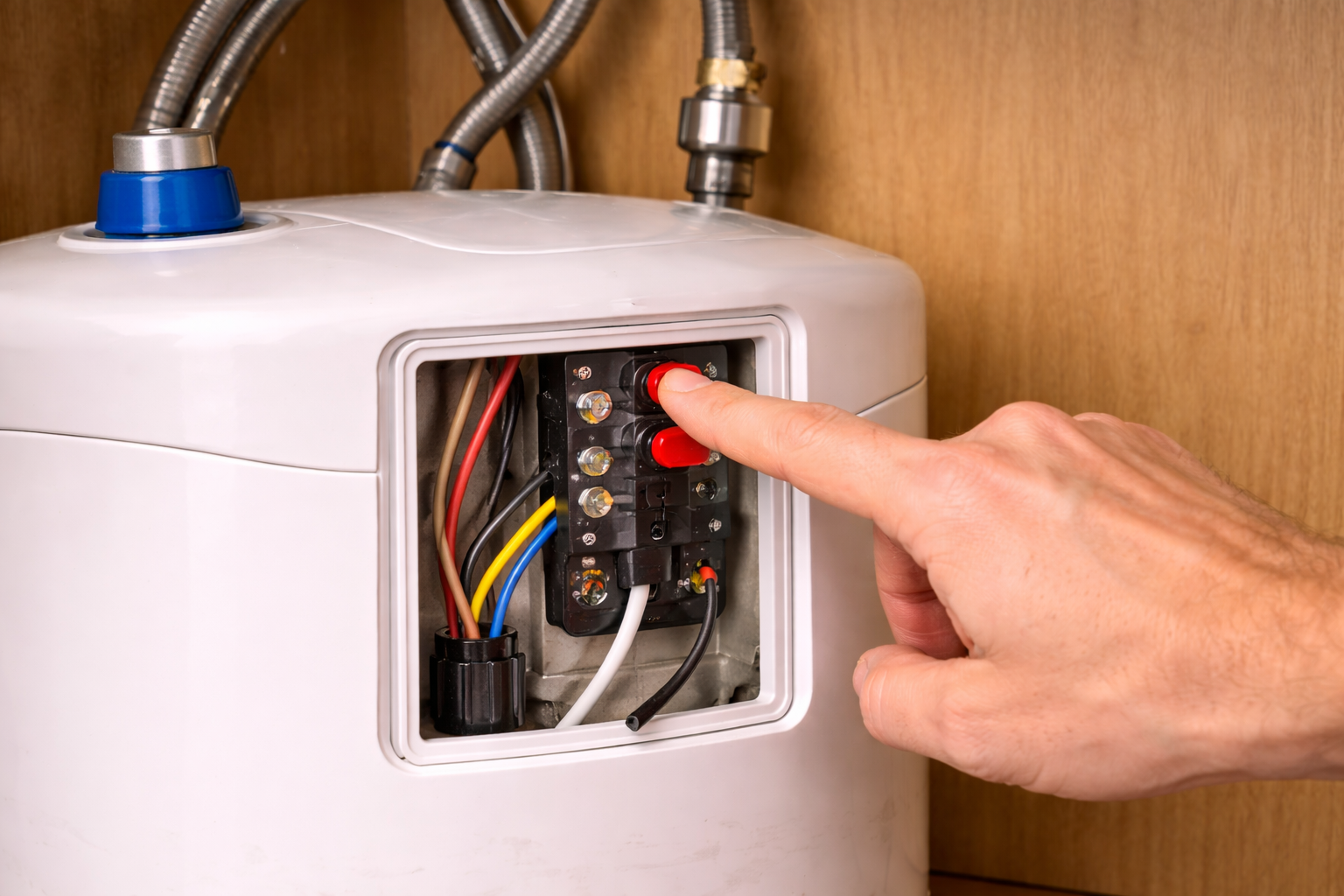
If your under-sink water heater has stopped producing hot water, it may have tripped its internal safety reset. Many mini-tank models include a high-temperature cutoff switch that shuts the unit down if it overheats.
Resetting the unit is often simple, but it should be done carefully.
If you’re troubleshooting no-heat issues, start with Why Is My Under-Sink Water Heater Not Getting Hot?
Step 1: Turn Off Power
Before opening any access panels:
-
Switch off the breaker
-
Unplug the unit (if applicable)
Never attempt to reset the unit while it is powered.
If you’re unsure about circuit setup, review Electrical Requirements for Under-Sink Water Heaters
Step 2: Locate the Reset Button
On most mini-tank models:
-
The reset button is located behind a small access panel
-
It may be near the thermostat
-
It is usually a small red button
Remove the access cover carefully according to manufacturer instructions.
Step 3: Press the Reset Button
Once located:
-
Press the reset button firmly
-
Replace the access panel
-
Restore power at the breaker
Allow time for the unit to heat fully before testing the water temperature.
Why Reset Trips Happen
The reset may trip due to:
-
Overheating
-
Faulty thermostat
-
Heating element issues
-
Poor electrical connection
If resets happen repeatedly, there may be an underlying issue.
For general troubleshooting, see Common Under-Sink Water Heater Problems and Solutions
Tankless Units
Most tankless under-sink heaters do not use a traditional tank-style reset button. Instead, they may:
-
Display an error code
-
Shut down electronically
-
Require power cycling
If comparing system types, see Tank vs Tankless Under-Sink Water Heaters: Which Is Better?
When to Call a Professional
Professional inspection may be appropriate if:
-
The reset trips repeatedly
-
Breakers trip frequently
-
You suspect a failed heating element
-
There are signs of internal damage
Quick Summary
Resetting an under-sink water heater usually involves turning off power, pressing the internal reset button, and restoring power.
If the unit continues to trip after resetting, further inspection is needed to identify the cause.