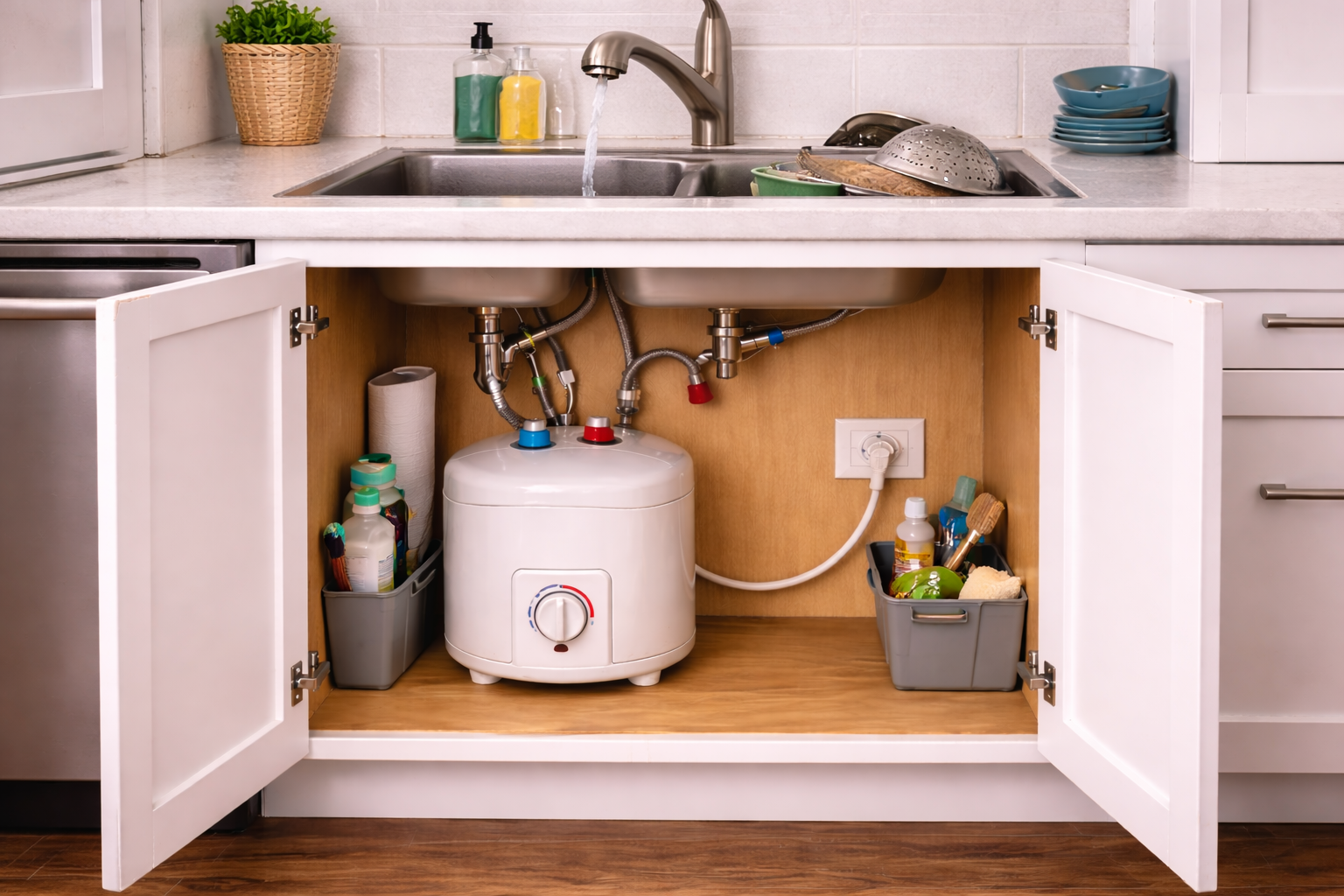
The best under-sink water heater for kitchen use depends on how often the sink is used, how much cabinet space is available, and whether you need stored hot water or a tankless setup. Kitchen sinks often place higher demand on a point-of-use heater than a bathroom sink, so the right choice usually comes down to balancing capacity, recovery, and installation requirements.
Quick Picks
- Best overall for most kitchen sinks: ThermoMate ES400B 4 Gallon
- Best for compact kitchen cabinet installs: Westinghouse 2.5 Gallon Mini Tank Water Heater
- Best for most kitchen tankless setups: EcoSmart ECO 8 Tankless Water Heater
- Best budget option for kitchen use: CAMPLUX ME25 Mini Tank Water Heater
Best Under-Sink Water Heater for Most Kitchen Sinks
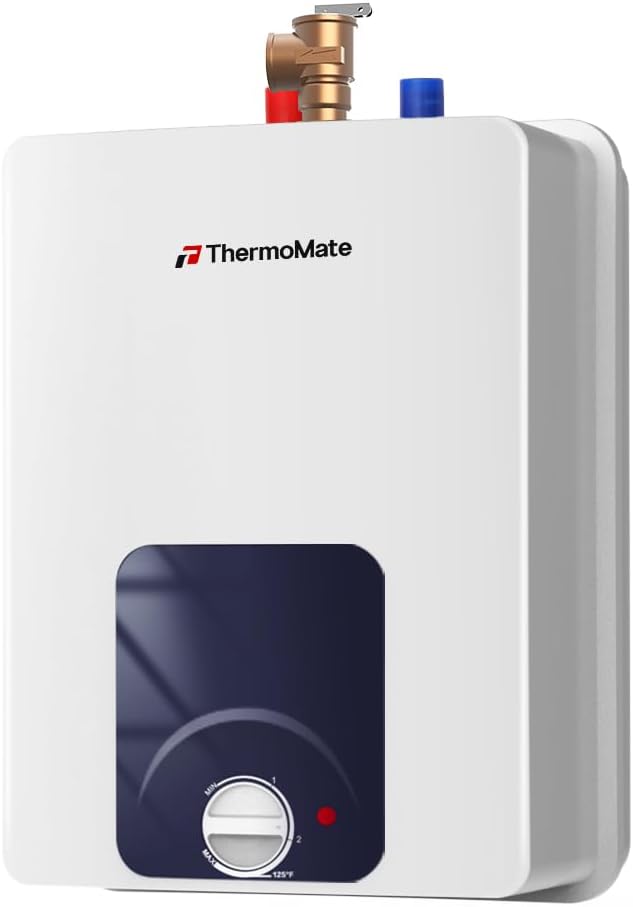
A larger mini-tank model that suits kitchen sinks where hot water use is more frequent or lasts longer than a bathroom sink. Check current price
This is the strongest overall fit for many kitchen sinks because kitchen use often involves longer draws than basic handwashing. Tasks like rinsing dishes, washing produce, or repeated short bursts of hot water can make a larger mini-tank more practical than a compact 2.5-gallon model.
It gives you a better buffer of stored hot water before recovery becomes noticeable. Best for heavier kitchen sink demand. Its main advantage is extra stored capacity. Its limitation is that it takes more room inside the cabinet than smaller units.
Best Tankless Under-Sink Water Heater for Kitchen Use

A mid-range tankless option that offers a more practical balance of performance and electrical demand for kitchen sinks. Check current price
This model is the better tankless choice for most kitchens because it sits between low-power point-of-use units and larger higher-demand systems. It is better suited to regular sink use than a small 120V unit, while still being more practical than going straight to the highest power category.
Best for most kitchen tankless setups. Its main advantage is balanced tankless output for everyday kitchen use. Its limitation is that it still requires more electrical planning than a mini-tank unit.
Best Under-Sink Water Heater for Compact Kitchen Cabinets

A compact mini-tank option for kitchen cabinets where available space is limited but stored hot water is still preferred. Check current price
This model makes sense when a kitchen cabinet does not have enough room for a larger 4-gallon unit but you still want the simpler point-of-use benefits of a mini-tank. It can be a better fit than a bigger tank or a more demanding tankless system in tighter under-sink spaces.
Best for compact kitchen cabinet installs. Its main advantage is easier fit in smaller spaces. Its limitation is that the smaller tank means less hot water storage for longer kitchen tasks.
Best Budget Under-Sink Water Heater for Kitchen Use

A lower-cost mini-tank option for kitchen sinks where the goal is faster hot water without a more expensive setup. Check current price
This is the most practical budget pick if you want the convenience of point-of-use hot water in the kitchen without spending more on a larger tank or tankless setup. It covers the core use-case well when the goal is shorter waits for hot water at one faucet.
Best for budget kitchen cabinet setups. Its main advantage is lower cost with compact size. Its limitation is that it has limited stored hot water and is not the best fit for heavier kitchen demand.
How to Choose
- Choose a larger mini-tank if your kitchen sink sees repeated or longer hot water use.
- Use a compact 2.5-gallon mini-tank if cabinet space is tight and demand is lighter.
- Consider tankless if you want on-demand heating and your electrical setup can support it.
- Measure the cabinet carefully before choosing a 4-gallon unit.
- Think about whether the main goal is faster hot water delivery or longer continuous use at the sink.
Final Recommendation
For most kitchen sinks, the ThermoMate ES400B 4 Gallon is the best under-sink water heater because kitchen use often demands a little more stored hot water than smaller point-of-use applications. If you want a tankless setup, the EcoSmart ECO 8 is the strongest overall choice. For smaller cabinets or tighter budgets, the Westinghouse 2.5 Gallon and CAMPLUX ME25 are both practical alternatives.