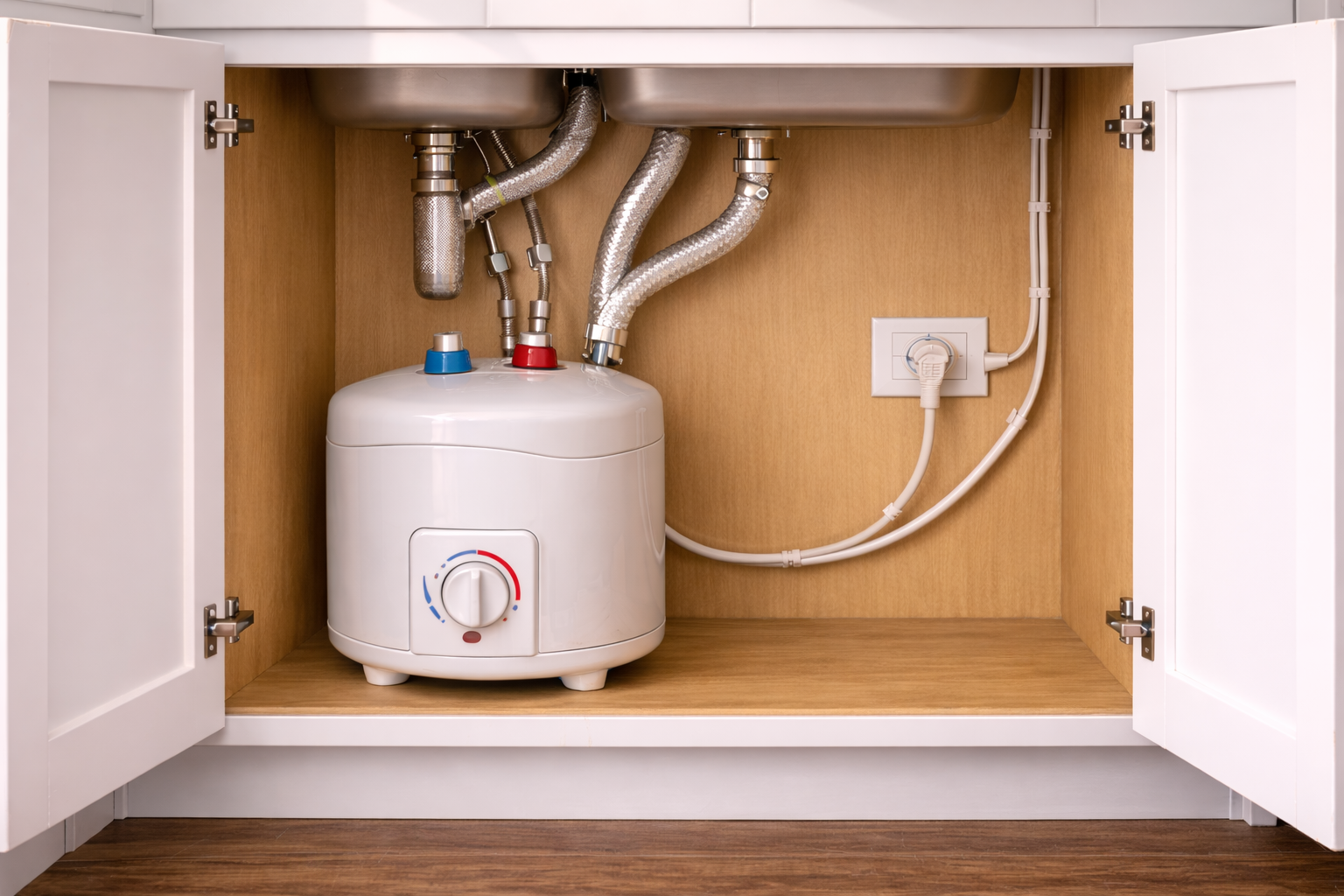
The best energy-efficient under-sink water heater is usually the one that matches the sink’s actual hot water demand without wasting electricity on unnecessary capacity. Efficiency at the point of use often comes from choosing the right size, reducing standby loss where possible, and avoiding a larger or more powerful unit than the setup really needs.
Quick Picks
- Best overall for efficient everyday use: GE Appliances 2.5 Gallon Mini Tank Water Heater
- Best for the most efficient tankless balance: EcoSmart ECO 8 Tankless Water Heater
- Best for efficient higher-demand sink use: ThermoMate ES400B 4 Gallon
- Best budget option for small efficient setups: CAMPLUX ME25 Mini Tank Water Heater
Best Energy-Efficient Under-Sink Water Heater Overall

A compact mini-tank model that matches common point-of-use demand without adding more size or power than most sinks need.
This is the strongest overall efficiency choice because many under-sink installations work best when the heater is sized closely to actual daily use. A compact 2.5-gallon mini-tank can reduce wasted energy from oversizing while still providing fast hot water at one sink.
It also gives you a simple point-of-use solution without the larger electrical demands of a bigger tankless system. Best for everyday efficient point-of-use use. Its main advantage is that it fits common sink demand well. Its limitation is that it is not the best fit for heavier or repeated long hot water draw.
Best Energy-Efficient Tankless Under-Sink Water Heater

A mid-range tankless option that provides on-demand heating without stepping into the highest power category.
For buyers who want tankless efficiency, this is the most balanced choice in the group. It gives you on-demand hot water without the standby loss of stored water, while staying more moderate than a higher-output unit.
Best for the most efficient tankless balance. Its main advantage is on-demand heating with more practical sizing for point-of-use use. Its limitation is that it still requires more electrical planning than a compact mini-tank model.
Best Energy-Efficient Under-Sink Water Heater for Higher Demand
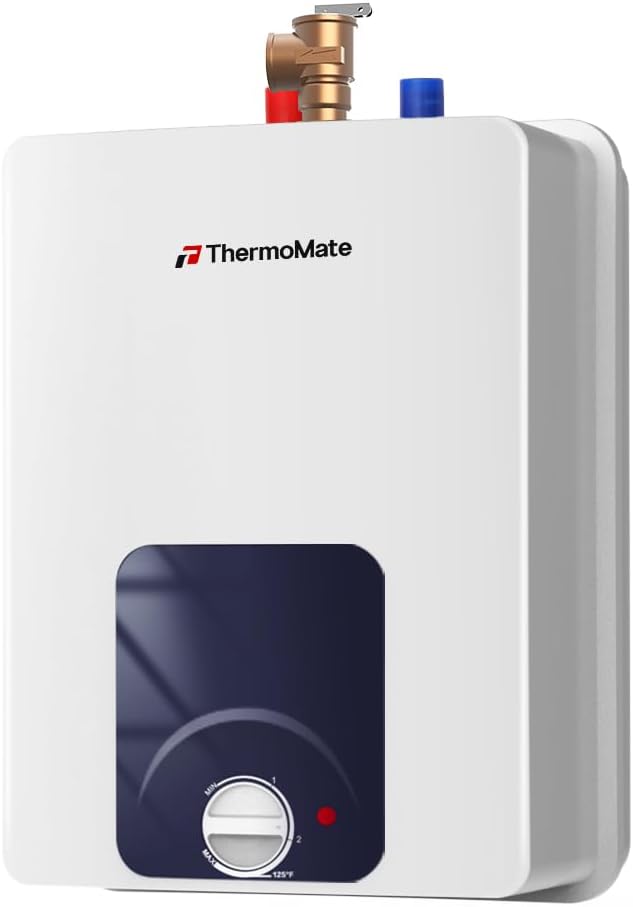
A larger mini-tank option for sinks that need more stored hot water to avoid constant reheating or short capacity limits.
Efficiency is not only about choosing the smallest heater possible. If a sink uses more hot water, a very small unit may cycle more often or run out too quickly. In that kind of setup, a slightly larger mini-tank can be the more efficient practical choice.
Best for efficient higher-demand sink setups. Its main advantage is better stored capacity for more frequent hot water use. Its limitation is that it takes more cabinet space and can be unnecessary for very light use.
Best Budget Energy-Efficient Under-Sink Water Heater

A lower-cost compact mini-tank option for sinks where the goal is efficient point-of-use hot water on a tighter budget.
This model is the best lower-cost efficiency pick because it keeps both size and complexity down. For a small under-sink setup, that can be the most practical route to reducing wasted hot water time without stepping up in cost.
Best for budget-efficient small cabinet setups. Its main advantage is compact size with a straightforward installation approach. Its limitation is that its small stored capacity limits it to lighter sink demand.
How to Choose
- Choose the smallest heater that realistically matches your sink’s actual hot water demand.
- Use a compact mini-tank for light point-of-use demand where simple stored hot water is the most practical option.
- Choose tankless if you want on-demand heating and your electrical setup can support it.
- Avoid oversizing, because a larger unit can use more space and energy than the sink really needs.
- Think about total efficiency in real use, not just product type, since the right fit matters more than labels alone.
Final Recommendation
For most under-sink setups, the GE Appliances 2.5 Gallon Mini Tank Water Heater is the best energy-efficient choice because it matches typical point-of-use demand without adding unnecessary capacity. If you prefer tankless on-demand heating, the EcoSmart ECO 8 is the strongest balanced option. If the sink sees heavier use, the ThermoMate ES400B 4 Gallon can be the more practical efficient choice.