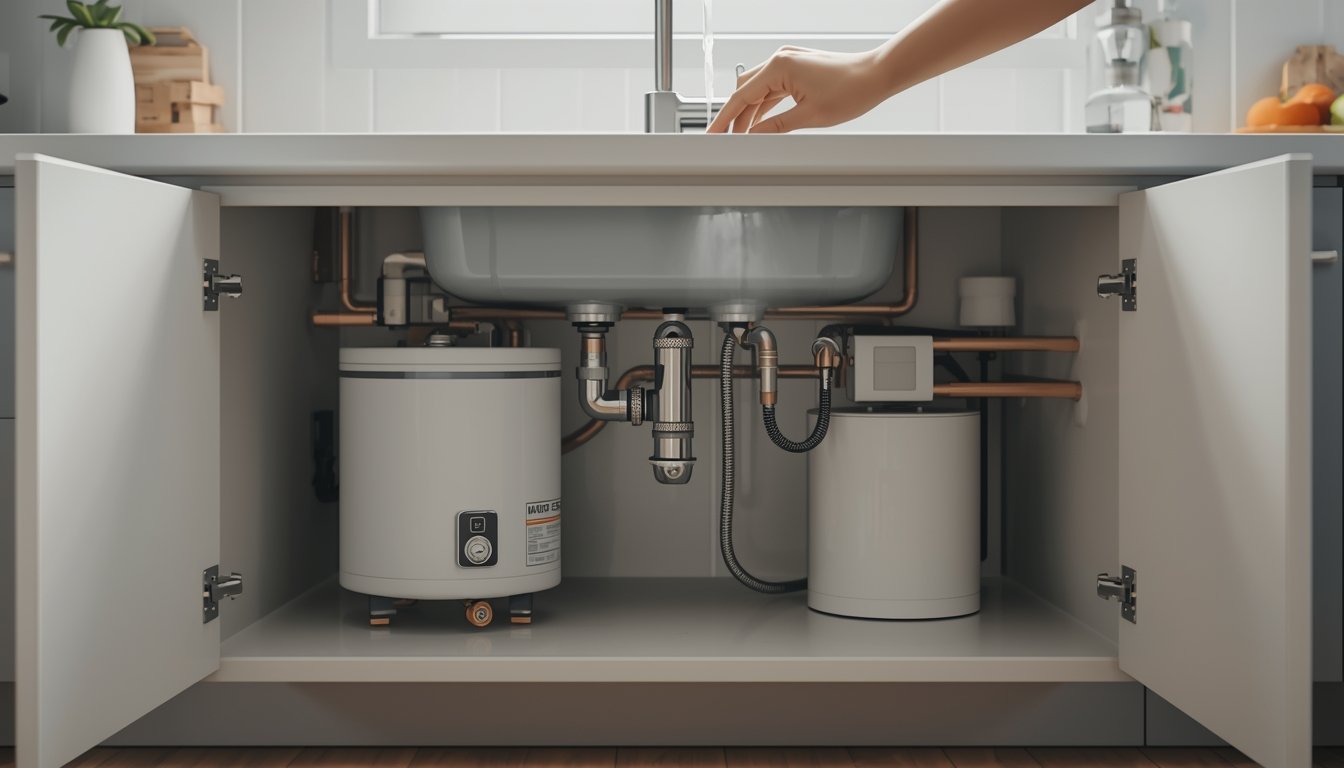
In most homes, waiting for hot water at the sink is a common frustration. It is typical to turn on the tap and wait 20 to 60 seconds before the water heats up, especially in kitchens or bathrooms located far from the main water heater.
This delay happens because hot water must travel through pipes from the heater to the tap. The longer the distance and the more heat lost along the way, the longer the wait.
Quick Answer
Hot water takes time to reach the sink because cold water sitting in the pipes must be cleared first. The longer the pipe distance and the greater the heat loss, the longer the delay.
The Main Reason: Distance from the Water Heater
In most homes, the biggest factor is the distance between the water heater and the sink.
Long pipe runs must be filled with hot water before it reaches the tap. This means the cold water already in the pipes has to be pushed out first.
This is why sinks on upper floors, extensions, or far ends of the house often take the longest.
Pipe Size and Water Volume
The size of the plumbing pipes also affects how long it takes.
- Larger pipes hold more water
- More cold water must be cleared
- Delays increase compared to smaller pipe systems
Even in homes with moderate distances, larger pipe diameter can increase wait time.
Heat Loss in the Pipes
In many homes, pipes are not fully insulated, especially in older properties.
As hot water travels through cooler areas such as walls, floors, or crawl spaces, it loses heat before reaching the tap.
This can make the water feel only warm at first, even after the delay.
Water Heater Type and Performance
The type of water heater also plays a role in how hot water is delivered.
Tank systems store hot water but still rely on pipe travel time. Tankless systems heat water on demand but do not eliminate distance delays.
If you are comparing options, see Tank vs Tankless Under-Sink Water Heaters.
Common Causes of Slow Hot Water
- Long distance between heater and sink
- Large diameter plumbing pipes
- Poor or missing pipe insulation
- Cold ambient temperatures around pipes
- High-demand plumbing layouts
In most homes, several of these factors combine to increase wait time.
Why It Happens More at Certain Sinks
Some sinks heat up quickly while others take longer due to plumbing layout.
This typically happens when:
- The sink is farther from the heater
- Bathrooms were added later
- Pipes run through colder parts of the home
The sink closest to the water heater will almost always receive hot water first.
When It Might Be a System Problem
In most cases, delays are normal. However, sometimes the issue is related to system performance.
This can happen when:
- The heater is undersized
- Heating elements are failing
- The system cannot keep up with demand
If you suspect a problem, see Under Sink Water Heater Not Working Properly.
Ways to Reduce Hot Water Delay
- Insulate exposed hot water pipes
- Reduce pipe length during renovations
- Install a point-of-use heater closer to the sink
- Use smaller diameter piping where possible
- Run the tap briefly before use
These steps can reduce delay, but they may not eliminate it completely.
When an Under-Sink Water Heater Makes Sense
In many homes, an under-sink water heater is used specifically to solve this problem.
By placing the heat source directly at the tap, it removes the delay caused by long pipe runs.
This works well for:
- Kitchens with long pipe distances
- Bathrooms far from the main heater
- Homes with frequent hot water use
If you are considering this option, see Are Under Sink Water Heaters Worth It.
To choose the right size, see What Size Under Sink Water Heater Do I Need.
Choosing the Right Solution
The best solution depends on your setup.
In many homes, improving insulation or reducing pipe length can help. In others, installing an under-sink heater provides the most noticeable improvement.
You can compare options here: Best Under Sink Water Heaters.
Final Thoughts
Slow hot water at the sink is usually not a fault — it is a result of plumbing layout and heat loss.
Once you understand the cause, the solution becomes clearer. In many cases, small improvements can reduce delay, while targeted upgrades like under-sink heaters can eliminate it almost entirely.
Related Guides