What Is an Under-Sink Water Heater and How Does It Work?
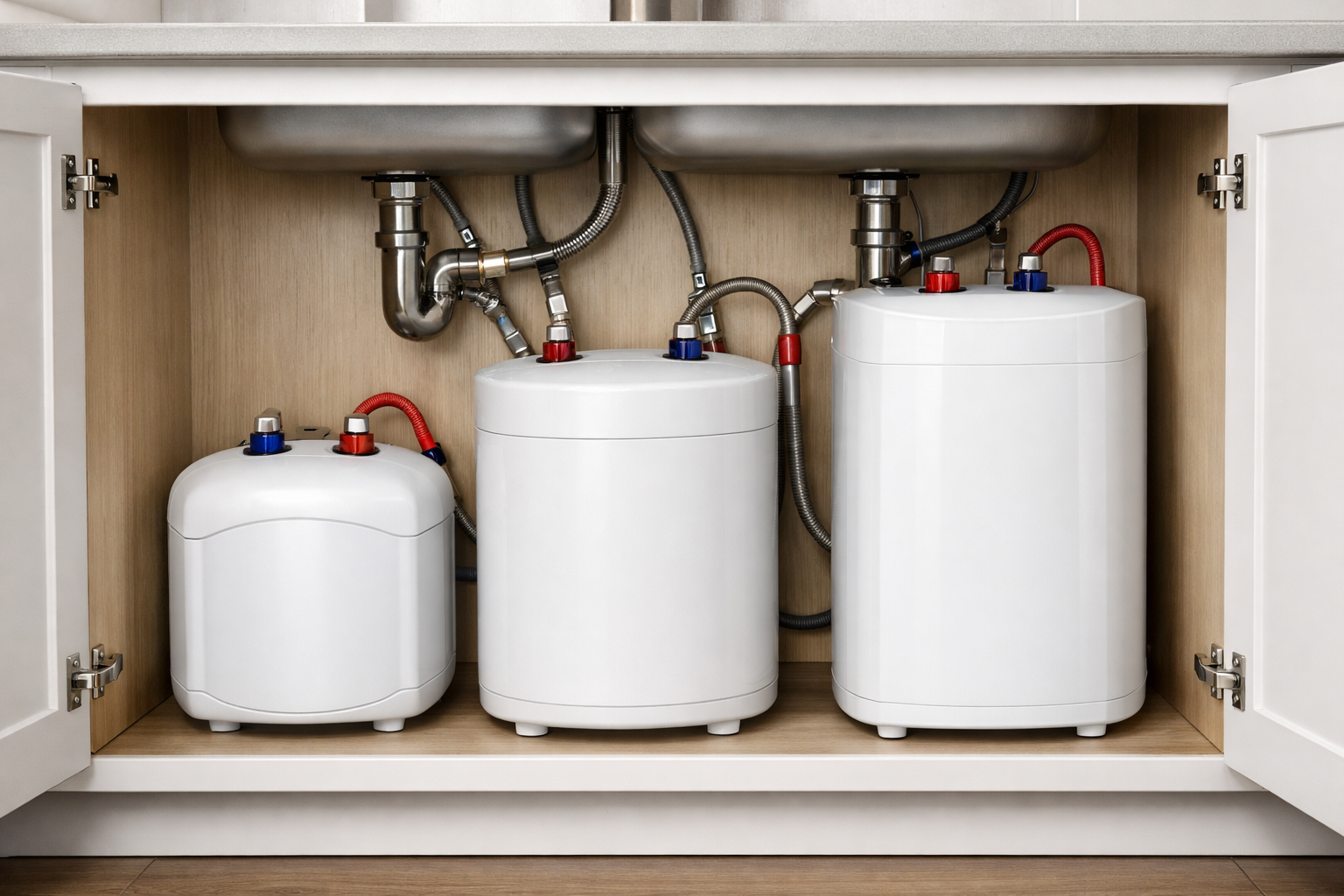
An under-sink water heater is a compact unit installed directly beneath a sink to provide hot water at the point of use. Instead of waiting for hot water to travel from a central hot water system, the water is heated right where it’s needed.
These units are most commonly used for kitchen sinks and bathroom sinks that take a long time to get hot water, or for fixtures that are far from the main water heater.
What an Under-Sink Water Heater Actually Does
A standard home hot water system can be located a long distance from the sink you’re using. That means you often run the tap for 10–60 seconds (or more) while you wait for hot water to reach the faucet.
An under-sink water heater reduces that delay by placing a small heater close to the tap. The result is:
-
Faster hot water at that sink
-
Less water wasted down the drain while waiting
-
More consistent hot water for short tasks (handwashing, rinsing, light dishwashing)
If you’re deciding whether this approach makes sense in your home, read When Does an Under-Sink Water Heater Make Sense?
The Two Main Types
Under-sink water heaters come in two main styles: mini-tank (storage) and tankless (on-demand). They solve the same problem, but they do it differently.
Mini-Tank Under-Sink Water Heaters (Storage)
A mini-tank unit stores a small amount of hot water (commonly 2.5 to 7 gallons). It heats that water and keeps it ready so it can deliver hot water quickly as soon as you turn on the tap.
How it works, step-by-step:
-
Cold water enters the mini-tank
-
A heating element warms the water inside the tank
-
Hot water stays stored until you turn on the faucet
-
When you use hot water, the tank refills with cold water and reheats
Mini-tank units are popular because they often work with standard household power and provide very predictable hot water for short bursts.
If you’re trying to decide what capacity you need, start with What Size Under-Sink Water Heater Do I Need?
You can also check these quick sizing guides:
Tankless Under-Sink Water Heaters (On-Demand)
A tankless unit does not store hot water. Instead, it heats water instantly as it flows through the unit when you turn on the hot tap.
How it works, step-by-step:
-
You turn on the hot tap
-
Water begins flowing through the unit
-
The heating element switches on automatically
-
Water is heated as it passes through and goes to the faucet
Tankless under-sink units can work well, but many require more electrical capacity than mini-tank models because they have to heat water instantly at full power.
If you’re considering a tankless setup, read Electrical Requirements for Under-Sink Water Heaters
How It Connects to Your Plumbing
Most under-sink water heaters are installed inline with the sink’s hot water line, but the exact setup depends on the model.
Common connection approaches include:
-
Feeding the heater from the cold line and delivering hot to the faucet
-
Feeding from the hot line as a booster (less common, depends on model)
-
Using a mixing valve or specific fittings depending on local plumbing setup
For a clearer overview of what’s typically required, see Plumbing Requirements for Under-Sink Water Heaters
Where It’s Usually Installed
Most units mount to the cabinet wall or sit on the cabinet base under the sink. The best location is usually:
-
Close to the faucet supply lines
-
Protected from being bumped by stored items
-
Positioned so you can access the power switch or controls
-
Installed where the plumbing connections won’t be stressed or kinked
To plan placement properly, read Where Should an Under-Sink Water Heater Be Installed?
Benefits and Trade-Offs
Under-sink water heaters are primarily about convenience and efficiency at one fixture.
Main benefits:
-
Faster hot water at the sink
-
Less water wasted while waiting
-
Better experience at remote sinks
-
Reduced frustration with long hot-water delays
Main trade-offs:
-
Extra cost to purchase and install
-
Uses cabinet space
-
Needs power supply (and sometimes a dedicated circuit)
-
Adds another appliance that may need maintenance
If you want a simple overview of costs, see Under-Sink Water Heater Installation Cost Guide
Quick Summary
An under-sink water heater is a point-of-use water heating solution. Mini-tank models store hot water for immediate delivery. Tankless models heat water as it flows, but usually require higher electrical capacity.
If you’re choosing between the two types, read Tank vs Tankless Under-Sink Water Heaters: Which Is Better?