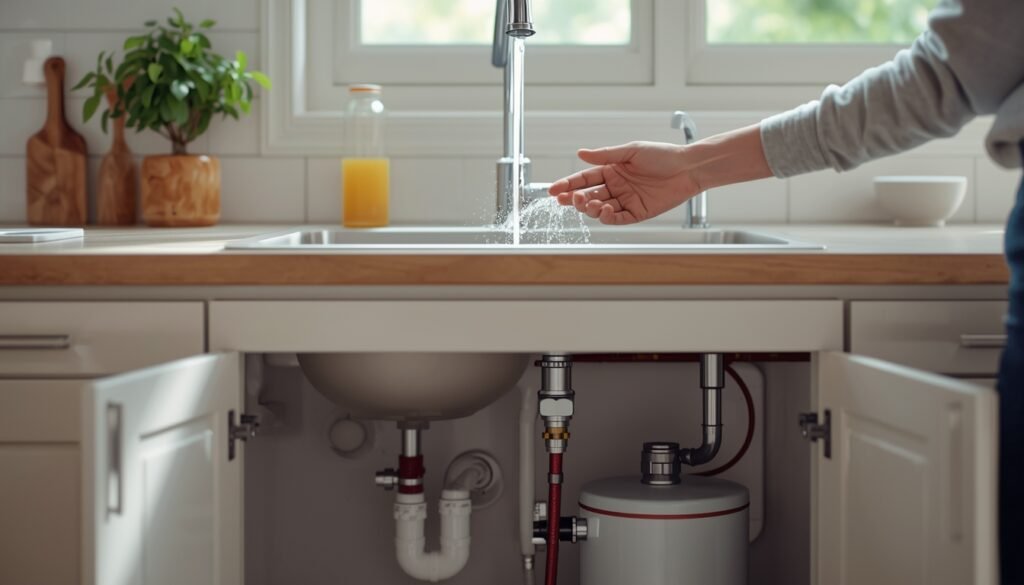
In most homes, an under sink water heater is installed to provide fast, convenient hot water at a single tap. A common issue is expecting it to deliver unlimited hot water, similar to a full household system. Many people find that the water starts hot but quickly turns lukewarm or cold during use.
The short answer is yes — most under sink water heaters can run out of hot water. This typically happens because many units, especially mini-tank models, store a limited amount of heated water that can be used up faster than it can be reheated.
How Under Sink Water Heaters Work
In most homes, under sink water heaters fall into two main types: mini-tank and tankless.
A common issue is assuming both types behave the same. Many people find that performance varies significantly depending on which system is installed.
This typically happens because:
- Mini-tank heaters store a fixed amount of hot water
- Tankless heaters heat water on demand but depend on power and flow rate
If you’re unsure which system you have or are considering, it helps to review tank vs tankless under-sink water heaters to understand how each type performs in real use.
Signs Your Heater Is Running Out of Hot Water
- Water starts hot but quickly turns cold
- Hot water only lasts a short time during use
- Temperature drops when using water continuously
- The unit struggles to keep up with repeated use
- You need to wait before hot water returns
These signs are usually normal for smaller systems, but they can feel like a fault if expectations are higher than the unit’s capacity.
Why Hot Water Runs Out
In most homes, the main reason hot water runs out is limited storage or heating capacity.
A common issue is using more hot water than the unit can supply at once. Many people find that even small tasks can quickly use up the available hot water.
This typically happens because:
- Mini-tank units only hold a few litres of hot water
- Reheating takes time after the tank is emptied
- Continuous use exceeds the unit’s recovery speed
Once the stored hot water is used, the system needs time to heat more before it can deliver consistent temperature again.
Mini-Tank vs Tankless Performance
Mini-tank heaters are the most likely to run out of hot water. In most homes, these are designed for short bursts of use, such as hand washing or light kitchen tasks.
A common issue is expecting them to support longer use, such as washing dishes or multiple tasks in a row. Many people find that the tank empties quickly under these conditions.
Tankless systems, on the other hand, do not store water. This typically allows them to provide continuous hot water, but only within their power limits. If the flow rate is too high or the unit is undersized, performance can still drop.
What Affects How Long Hot Water Lasts
- Tank size and storage capacity
- Heating element power and recovery speed
- Water flow rate at the tap
- Incoming water temperature
- Frequency of use
These factors determine whether the heater can keep up with demand or runs out quickly.
When It’s Normal vs a Problem
In most homes, running out of hot water is completely normal for smaller units.
A common issue is mistaking normal behaviour for a fault. Many people find that once they understand the limits of the system, the performance makes more sense.
This typically means:
- Short bursts of hot water are expected
- Continuous use may exceed capacity
- Waiting between uses allows the unit to recover
However, if hot water runs out almost instantly or never gets fully hot, the issue may go beyond normal operation.
When It Might Be a System Issue
There are cases where running out of hot water points to a problem.
A common issue is poor performance due to incorrect sizing or faults. Many people find that the unit cannot meet even light demand.
This typically happens when:
- The unit is too small for the intended use
- Heating elements are not working properly
- Electrical supply is insufficient
If you suspect a fault, it’s worth checking under sink water heater not working properly to identify possible causes and fixes.
How to Improve Hot Water Performance
- Choose a unit with a larger tank if you need longer usage
- Reduce water flow to extend available hot water
- Allow time between uses for the heater to recover
- Match the unit size to your actual usage needs
- Ensure the unit is receiving the correct power supply
If you’re unsure whether your current setup is suitable, reviewing what size under sink water heater do I need can help match the system to your requirements.
Final Thoughts
In most homes, an under sink water heater running out of hot water is not a fault—it is a limitation of how the system is designed. A common issue is expecting continuous hot water from a unit built for short, targeted use.
Many people find that once they understand how capacity and recovery time work, the behaviour becomes predictable. This typically leads to better usage habits or choosing a unit that better fits their needs.
By matching the system to your usage and expectations, you can avoid frustration and get the most reliable performance from your under sink water heater.
Related Guides
What Is an Under Sink Water Heater and How Does It Work?
Electrical Requirements for Under Sink Water Heaters
Can You Plug an Under Sink Water Heater Into a Standard Outlet?