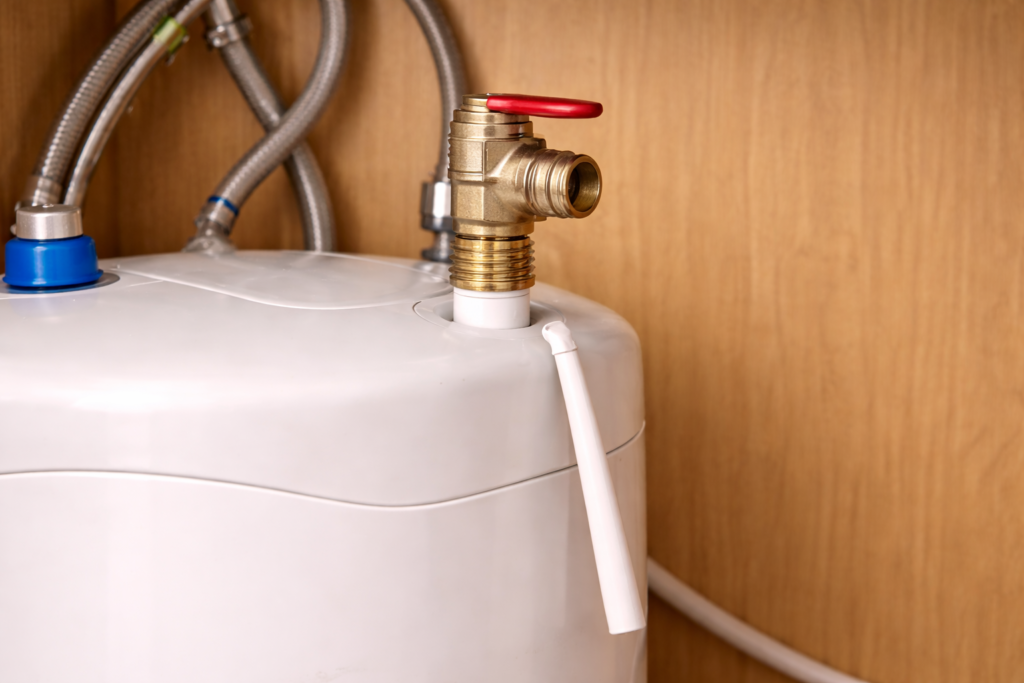
Most mini-tank under-sink water heaters require a temperature and pressure (T&P) relief valve. This safety component helps prevent excessive pressure buildup inside the tank.
Tankless models generally do not use a traditional tank-style pressure relief valve, but they must still meet safety and plumbing code requirements.
If you’re reviewing plumbing basics, see Plumbing Requirements for Under-Sink Water Heaters
What a Pressure Relief Valve Does
A pressure relief valve is designed to:
-
Release excess pressure inside the tank
-
Prevent tank rupture
-
Protect plumbing connections
When water heats up, it expands. In a closed system, that expansion can increase pressure. The relief valve opens automatically if pressure exceeds a safe limit.
Mini-Tank Units
Most mini-tank under-sink heaters include:
-
A factory-installed T&P valve
-
A threaded port for valve installation
-
Instructions for proper discharge piping
In many cases, the valve must be installed even if the tank is small.
Always follow the manufacturer’s installation manual.
If you’re installing the unit yourself, review Can You Install an Under-Sink Water Heater Yourself?
Discharge Line Requirements
In many jurisdictions, the pressure relief valve must be connected to a discharge tube that:
-
Directs water downward
-
Terminates near the floor or approved drain point
-
Is not capped or blocked
Local plumbing codes determine exact requirements.
Tankless Units
Tankless under-sink heaters do not store water, so they do not build internal tank pressure in the same way.
However, they must still be installed according to code and manufacturer instructions.
If you’re comparing system types, see Tank vs Tankless Under-Sink Water Heaters: Which Is Better?
When Pressure Issues Occur
If your home has:
-
High water pressure
-
A closed plumbing system
-
A malfunctioning expansion tank
You may experience nuisance relief valve discharge.
Addressing system-wide pressure issues may be necessary.
Quick Summary
Mini-tank under-sink water heaters typically require a temperature and pressure relief valve. Proper installation and discharge routing are essential for safety and code compliance.
Tankless models do not use a traditional tank-style T&P valve but must still meet plumbing safety standards.