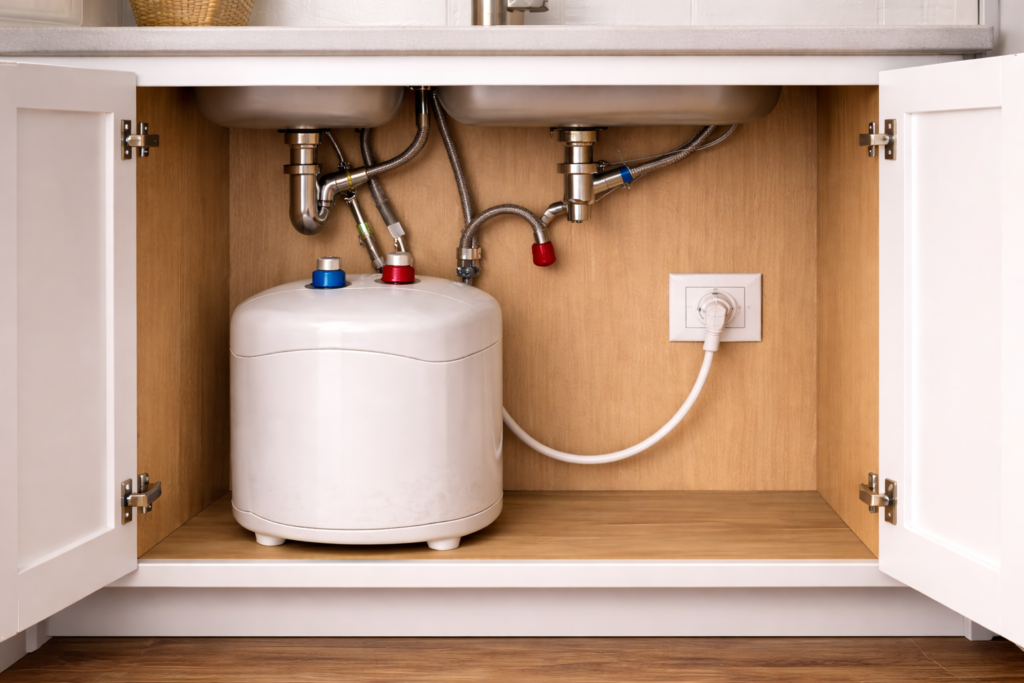
Proper plumbing connections are essential for safe and reliable operation of an under-sink water heater. While these units are compact, they must be installed correctly to prevent leaks, pressure issues, and performance problems.
If you’re new to how these systems function, start with What Is an Under-Sink Water Heater and How Does It Work?
Basic Plumbing Connections
Most under-sink water heaters connect to:
-
The cold water supply line
-
The hot water outlet feeding the faucet
In a typical mini-tank installation:
-
Cold water enters the heater from the shutoff valve.
-
Water is heated inside the tank.
-
Hot water exits the heater and flows to the faucet.
Tankless models follow a similar flow pattern but heat water instantly as it passes through the unit.
If you’re comparing system types, see Tank vs Tankless Under-Sink Water Heaters: Which Is Better?
Shutoff Valves
A shutoff valve on the cold supply line is important. It allows you to:
-
Isolate the heater for maintenance
-
Shut off water in case of leaks
-
Service the unit without turning off water to the whole house
Some installations may also include a shutoff on the hot outlet side.
Pressure Relief Valve
Mini-tank under-sink water heaters typically include a temperature and pressure (T&P) relief valve.
This valve:
-
Protects against excessive pressure buildup
-
Must be installed according to manufacturer instructions
-
May require a discharge line
For more detail, see Do Under-Sink Water Heaters Need a Pressure Relief Valve?
Flexible Supply Lines
Most installations use flexible braided supply hoses. These simplify connection and reduce stress on fittings.
When installing:
-
Avoid sharp bends
-
Do not overtighten fittings
-
Check for leaks after pressurizing the system
Drainage Considerations
Under normal operation, these units do not continuously drain water. However, during servicing or pressure relief activation, discharge water must be directed safely.
Always follow local plumbing codes regarding discharge line routing.
Cabinet Space and Routing
Under-sink cabinets often have limited space. Proper routing of supply lines helps prevent:
-
Kinked hoses
-
Strained fittings
-
Interference with stored items
For placement guidance, review Where Should an Under-Sink Water Heater Be Installed?
DIY vs Professional Plumbing
Basic mini-tank installations may be manageable for experienced DIY homeowners. However, professional installation may be appropriate if:
-
Plumbing modifications are required
-
Shutoff valves need replacement
-
Local code requires licensed work
For installation overview, see Can You Install an Under-Sink Water Heater Yourself?
Quick Summary
Under-sink water heaters require proper connection to cold supply and hot outlet lines, secure shutoff valves, and correct installation of pressure relief components.
Following manufacturer instructions and local plumbing codes is essential for safe operation.