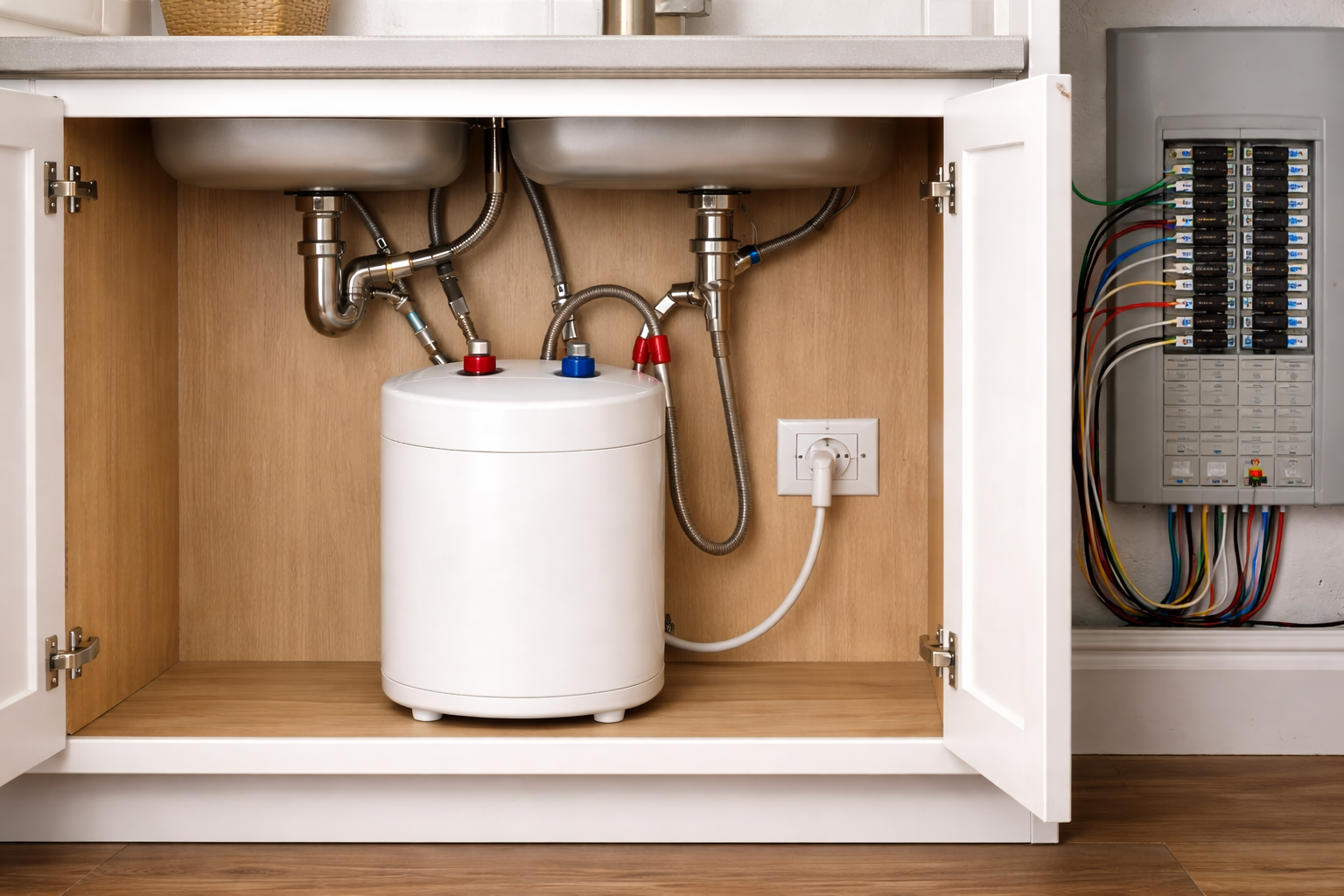
Electrical requirements are one of the most important factors when choosing an under-sink water heater. The power supply must match the unit’s voltage and amperage needs.
In most homes, mini-tank and tankless systems have very different electrical demands. Choosing the wrong setup can lead to installation issues, breaker trips, or the need for costly upgrades.
Quick Electrical Requirements Overview
Most under-sink water heaters fall into two categories:
- Mini-tank units: typically run on standard 120V outlets and draw moderate power
- Tankless units: often require 240V circuits and significantly higher amperage
The correct choice depends on your available electrical capacity and how much hot water you need.
Voltage Requirements
Most mini-tank under-sink water heaters operate on:
- 120 volts (standard household outlet)
Some larger mini-tank models and many tankless systems may require:
- 240 volts
Always check the manufacturer’s specifications before purchasing.
If you are unsure about outlet compatibility, see Can You Plug an Under-Sink Water Heater Into a Standard Outlet.
Amperage and Circuit Load
In addition to voltage, amperage determines how much electrical load the unit places on your circuit.
Mini-tank units often draw:
- 10 to 15 amps
Tankless units may draw significantly more:
- 20 to 40+ amps depending on the model
High-draw units typically require upgraded wiring and circuit capacity.
Dedicated Circuit Requirements
Many mini-tank units can operate on an existing circuit, but this depends on:
- What else is connected to the circuit
- The breaker rating
- Local electrical code
Tankless systems are far more likely to require a dedicated circuit due to higher power demand.
For a full explanation, see Do Under-Sink Water Heaters Need a Dedicated Circuit.
GFCI and Safety Considerations
Because under-sink heaters are installed near water, proper electrical protection is essential.
- GFCI outlet or breaker
- Proper grounding
- Correct breaker size
- Manufacturer-specified wire gauge
Local building codes may require specific safety measures, especially in kitchens and bathrooms.
Panel Capacity and Electrical Limits
Before installing a higher-demand unit, confirm your electrical panel can support it.
- Available breaker space
- Adequate total service capacity
- Room for upgrades if needed
If your panel is near capacity, installing a tankless unit may require significant electrical work.
How Electrical Requirements Affect Heater Choice
Electrical capacity often determines which type of heater is practical for your home.
Mini-tank systems are easier to install in most homes because they use standard outlets and lower amperage.
Tankless systems provide continuous hot water but often require electrical upgrades.
If you are still comparing options, see Tank vs Tankless Under-Sink Water Heaters: Which Is Better.
Common Electrical Mistakes
- Assuming any outlet can support a heater
- Ignoring amperage limits
- Overloading existing circuits
- Not checking panel capacity before installation
These issues can lead to breaker trips, poor performance, or unsafe operation.
Choosing the Right Heater for Your Electrical Setup
Before selecting a unit, it is important to match the heater to your home’s electrical capacity.
If your setup is limited, a mini-tank unit is often the simplest option. If your panel can support higher loads, a tankless system may be worth considering.
To match heater size and usage needs, see What Size Under-Sink Water Heater Do I Need.
You can also compare models here: Best Under-Sink Water Heaters.
Quick Electrical Checklist
- Voltage compatibility (120V vs 240V)
- Amperage requirements
- Circuit capacity
- Panel availability
- Safety protection (GFCI, grounding)
Once you understand the electrical requirements, you can compare suitable models here: Best Under Sink Water Heaters.
Bottom Line
Most mini-tank under-sink water heaters run on 120V and can work with existing circuits, while tankless systems often require 240V and higher amperage.
Choosing the right unit depends on matching the heater’s electrical requirements to your home’s capacity.
Getting this right ensures safe operation, reliable performance, and avoids unnecessary installation issues.