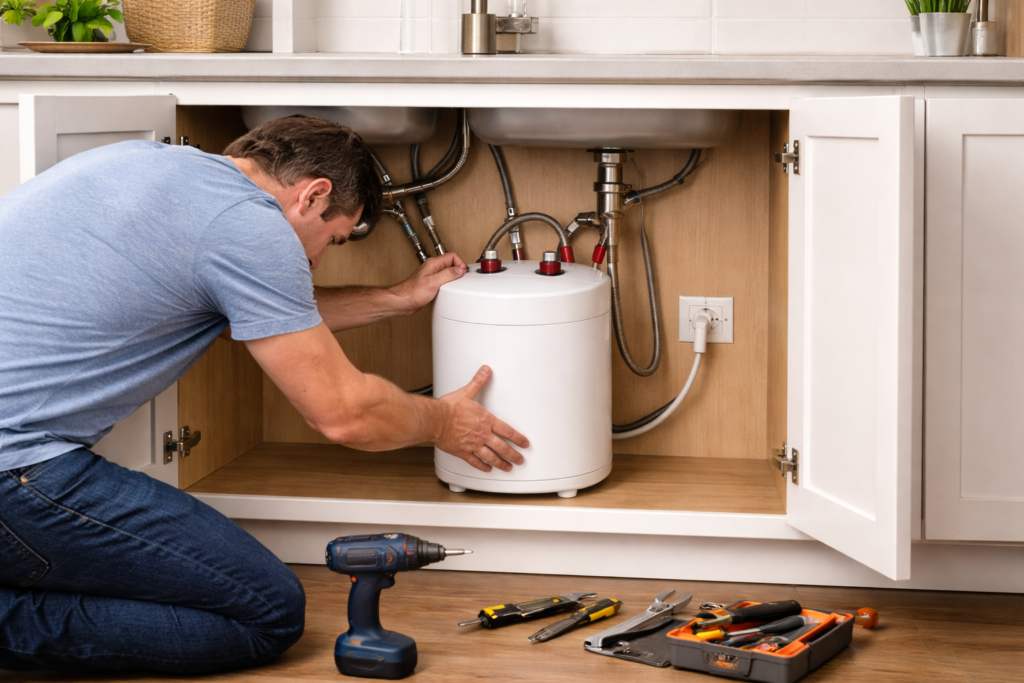
Installing an under-sink water heater is possible for some homeowners, but it depends on plumbing access, electrical setup, and local regulations.
Mini-tank units are generally simpler to install than tankless models. However, both involve water and electricity — so safety and compliance matter.
If you’re new to these systems, start with What Is an Under-Sink Water Heater and How Does It Work?
What Installation Involves
Most under-sink installations include:
-
Mounting the unit inside the cabinet
-
Connecting to the cold water supply
-
Connecting the hot water outlet to the faucet
-
Ensuring proper pressure relief valve installation
-
Connecting to an electrical outlet or circuit
For plumbing specifics, see Plumbing Requirements for Under-Sink Water Heaters
Electrical Considerations
Many small mini-tank units operate on standard 120V power and may plug into an existing outlet.
However, some units require:
-
A dedicated circuit
-
Higher amperage
-
Hardwired electrical connection
Before attempting installation, review Electrical Requirements for Under-Sink Water Heaters
You should also check Do Under-Sink Water Heaters Need a Dedicated Circuit?
If you’re unsure whether you can use an existing outlet, read Can You Plug an Under-Sink Water Heater Into a Standard Outlet?
When DIY Installation May Be Reasonable
A confident DIY installation may be realistic if:
-
You’re installing a small mini-tank unit
-
There is an accessible shutoff valve
-
The electrical outlet already meets requirements
-
You’re comfortable working with plumbing fittings
Clear installation instructions from the manufacturer are essential.
When to Consider Professional Installation
Hiring a licensed plumber or electrician may be appropriate if:
-
Electrical upgrades are required
-
You’re installing a tankless unit with high power demand
-
Local codes require licensed installation
-
Cabinet modifications are needed
If you want a cost overview, see Under-Sink Water Heater Installation Cost Guide
Local Codes and Safety
Always check local building and electrical codes before installation. Some jurisdictions require:
-
GFCI protection
-
Dedicated circuits
-
Pressure relief valve discharge piping
-
Permits or inspections
Safety should take priority over convenience.
Quick Summary
Mini-tank under-sink water heaters are often manageable for experienced DIY homeowners when plumbing and electrical conditions are straightforward.
Tankless units and installations requiring circuit upgrades are typically better handled by professionals.
Understanding both plumbing and electrical requirements before starting can prevent costly mistakes.