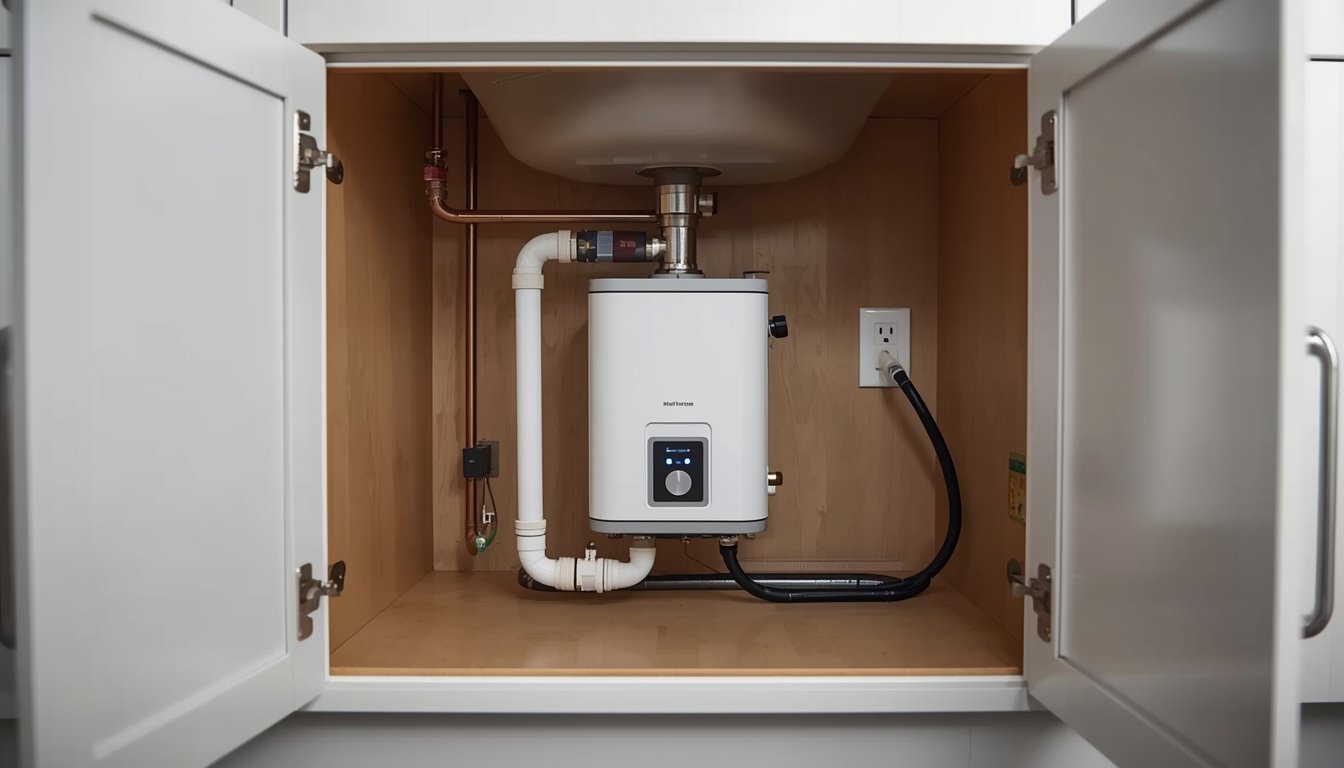
Choosing the right under-sink water heater depends on how you use the sink, how much hot water you need, and what your electrical setup can support.
In most homes, the decision comes down to tank size, heater type, and installation requirements. Getting these factors right ensures reliable hot water without unnecessary cost or complexity.
Quick Selection Guide
- Bathroom sinks → small 2.5-gallon mini-tank
- Kitchen sinks → 4 to 7-gallon mini-tank
- Continuous hot water → tankless (if electrical capacity allows)
For sizing details, see What Size Under-Sink Water Heater Do I Need.
Step 1: Understand Your Usage
The most important factor is how the sink is used.
- Short bursts (handwashing, rinsing) → smaller tank
- Longer use (kitchen cleaning, filling pots) → larger tank
A common mistake is choosing a heater based on size alone instead of actual usage.
Step 2: Choose Between Tank and Tankless
There are two main types of under-sink water heaters.
Mini-Tank Systems
- Store hot water
- Simple installation
- Lower electrical demand
Tankless Systems
- Heat water on demand
- Compact design
- Higher electrical requirements
For a full comparison, see Tank vs Tankless Under-Sink Water Heaters: Which Is Better.
Step 3: Check Electrical Capacity
Your electrical setup may limit your options.
- Most mini-tank units run on 120V
- Tankless units often require 240V and higher amperage
Before choosing a unit, review Electrical Requirements for Under-Sink Water Heaters and Do Under-Sink Water Heaters Need a Dedicated Circuit.
Step 4: Consider Installation Space
Under-sink heaters must fit within the cabinet.
- Measure available space
- Allow room for plumbing connections
- Ensure access for maintenance
For placement guidance, see Where Should an Under-Sink Water Heater Be Installed.
Step 5: Match Capacity to Expectations
Mini-tank units provide immediate hot water but have limited supply.
Tankless units provide continuous hot water but depend on electrical capacity.
Matching the heater to your expectations avoids common frustration issues like running out of hot water.
Common Mistakes to Avoid
- Choosing a tank that is too small
- Ignoring electrical limitations
- Overestimating how much hot water is needed
- Not measuring cabinet space
Choosing the Right Model
Once you understand your usage and limitations, the next step is selecting a model that fits your needs.
You can compare suitable options here: Best Under-Sink Water Heaters or Under Sink Water Heater Reviews.
Quick Checklist
- Usage type (bathroom vs kitchen)
- Tank size or flow requirement
- Electrical capacity
- Available space
Bottom Line
The best under-sink water heater depends on how you use the sink and what your home can support.
Mini-tank units are simple and reliable for most situations, while tankless systems offer continuous hot water where electrical capacity allows.
Choosing correctly ensures consistent performance without unnecessary complexity.